
How a Small Department Uses Assistive AI to Protect 26,000 People
Featuring & special thanks to Captain Richard Small and Laura Sotelo, Dispatch Supervisor
There was a shooting in Galt. While dispatchers were managing the response — coordinating units, supporting officers in the field, handling radio traffic — the non-emergency calls kept coming. In the past, each one would have required a dispatcher to stop, answer, ask if there was an emergency, and put the caller on hold. Instead, Prepared handled every one of them automatically in the background. The dispatchers never broke focus.
That moment didn't happen by accident. It happened because Galt PD had already decided that the way things were working wasn't sustainable.
Galt Police Department serves 26,000 residents with 39 sworn officers and eight dispatch personnel. The Communications Unit handles nearly 30,000 calls per year — and more than 73% of them are non-emergency. With shifts where a single dispatcher is sometimes on duty alone, the volume of routine calls was creating a structural problem: every non-emergency call answered was attention pulled away from incidents that actually needed it.
Captain Small describes what the high-stakes version of that problem looks like:
"We're a pretty safe town, but when things happen, you're it, and that can be very, very overwhelming. If we get a shooting, we've got one call-taker trying to triage 30 calls. Some of them are about the shooting, some of them are not, and we've got a dispatcher who's now coordinating 11 different programs on 5 different screens, and bringing in multiple agencies. They have to do all of that, and do it well, because the safety of the officers in the field is at stake. It's a huge responsibility for one person to handle."
In 2024, Galt PD partnered with Prepared to change that equation.
When It Matters Most, Dispatchers Can Focus on What Matters Most
Prepared's Automated Non-Emergency Triage handles calls to Galt's 10-digit line automatically. The AI agent interacts with callers, identifies the nature of the request, and either resolves it or routes it to the right resource — without a dispatcher ever picking up. When a genuine emergency surfaces, the call transfers directly and immediately.
The implementation was simpler than anyone expected. Dispatch Supervisor Laura Sotelo recalls:
"The thought of having to program something in the backside of a system like that was scary, but it's very easy, very user-friendly. You can create or add this intent, it's live within seconds and you can test it immediately. That was a win."
And when the shooting happened, it worked exactly as designed.
"It was a game-changer to focus fully on managing the critical incident and supporting our officers, knowing that Prepared was handling all non-emergency calls in the background, without dispatchers having to interrupt their work by putting callers on hold just to stop the ringing and distractions."
Citizens still got their questions answered. The dispatchers never had to choose between picking up and staying focused. Both things happened at once.
Every Call, Captured — Even the Hard Ones
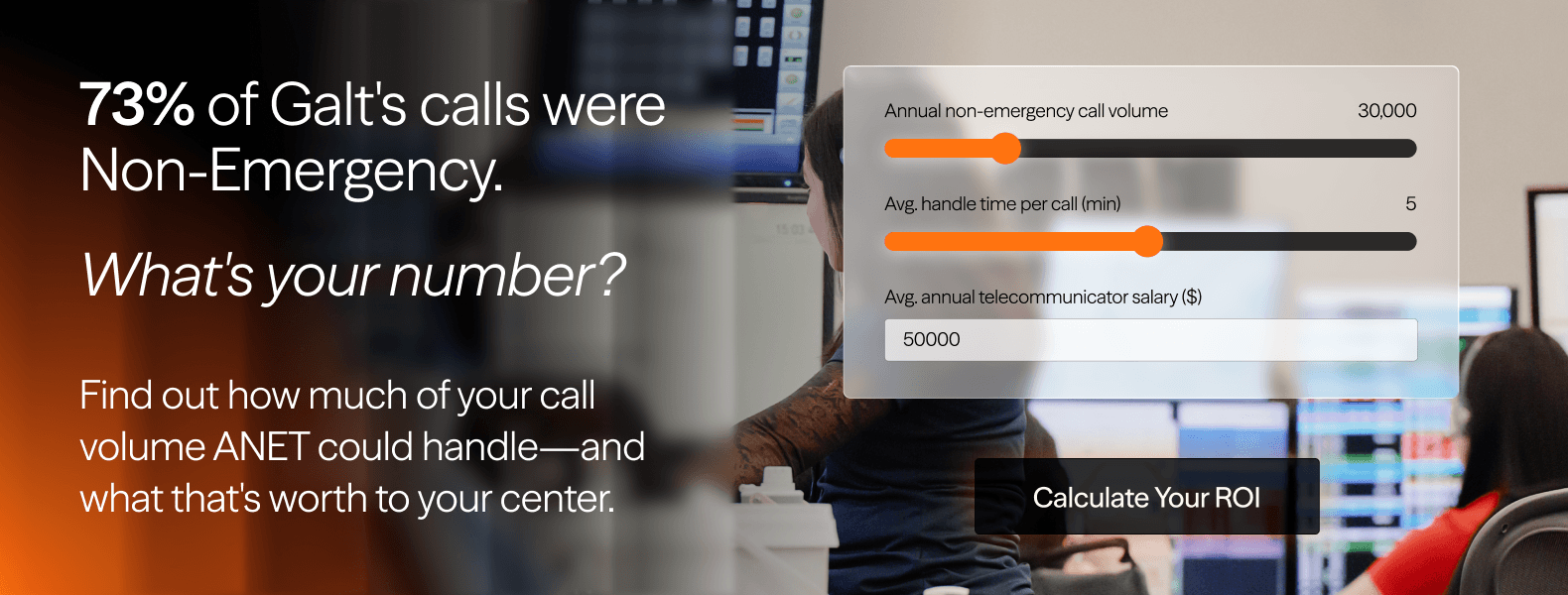
With 73% of call volume now handled before it reaches a dispatcher's headset, the calls that do come through are the ones that genuinely need a human. Prepared's Assistive Call-Taking makes sure those calls are handled with precision.
Every 911 call receives a live transcription, AI-generated summary, and highlighted key insights — in real time. Dispatchers have the caller's address, the location they're calling from, and street view without stopping to ask. When two dispatchers are on shift, whoever is on radio can read both sides of a live conversation as it happens.
Sotelo on what that means in practice:
"The summary that Assistive Call-Taking creates is just so clean. It's transcribing the call, so even if we didn't catch every detail of what the caller was saying while handling radios, we could go back and document all of the details, and it creates the summaries for us. It makes our narratives cleaner and more descriptive."
It also changes what's possible when something urgent surfaces mid-call:
"The other day, somebody said 'gun' and immediately we were both looking at the call. Before I was even done copy-pasting what the caller was telling me, my partner could tap into the call, view it in real-time, and answer officers' questions immediately. That, for sure, is a time saver."
For new hires, the transcripts and summaries act as a built-in safety net — a real-time double-check that lets trainees build confidence without flying blind. Going live was easy: "We just turned it on and used it."
What It Adds Up To
The combination of Automated Non-Emergency Triage and Assistive Call-Taking has changed what it means to work at Galt's Communications Unit. Call load is filtered and summarized. Critical incidents get full attention. New dispatchers ramp faster. And the community gets better, faster service — without being put on hold.
Captain Small puts it plainly:
"With Prepared, we allow our dispatchers to be better at what they do. They're able to concentrate and focus on the officers in the field and make sure that they're as safe as possible, while making sure that we respond to the community's needs in the best way that we can. This is exactly what we needed."


.svg)